
What is it?
Conservative orthotic support means support without surgery. It includes clinically prescribed braces, supports, taping techniques and soft orthotic devices, used to support joints, help manage pain and protect an injury while it recovers. Farida Cajee-Botes fits and adjusts each brace and support after an assessment, at the Orthocast Morningside rooms in Sandton or at your home or hospital bed across Johannesburg and Gauteng.
How can it help?
- Managing musculoskeletal pain
- Supporting injured joints during healing
- Stability for joints during daily activity
- Offloading strained joints and tendons during movement
- Supporting recovery after injury or surgery
- Support during a gradual return to activity
Devices We Provide
A selection of the devices we fit within this service. Filter by area of the body to find what fits your needs. The right device is always confirmed after an individual assessment.
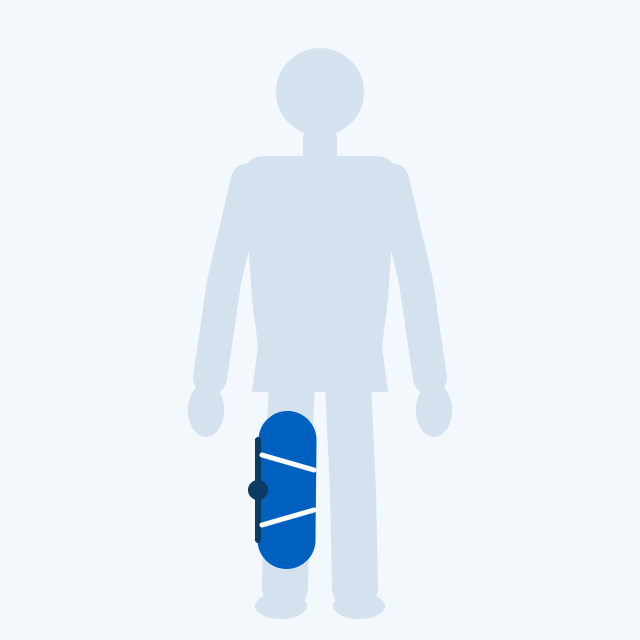
Osteoarthritis Offloading Knee Brace
Adults with mild-to-moderate one-sided knee osteoarthritis seeking pain relief during standing and walking.
A prefabricated hinged or wrap-style brace that applies a gentle three-point leverage system to shift load away from the worn side of the knee joint. Fitted from standard off-the-shelf sizes and adjusted to the individual's alignment, it is designed to help ease osteoarthritic pain during daily activity or sport.
- Adjustable offloading strap/hinge system
- Suits medial or lateral compartment involvement
- Low-profile design for daily wear or sport
- Available in multiple standard sizes
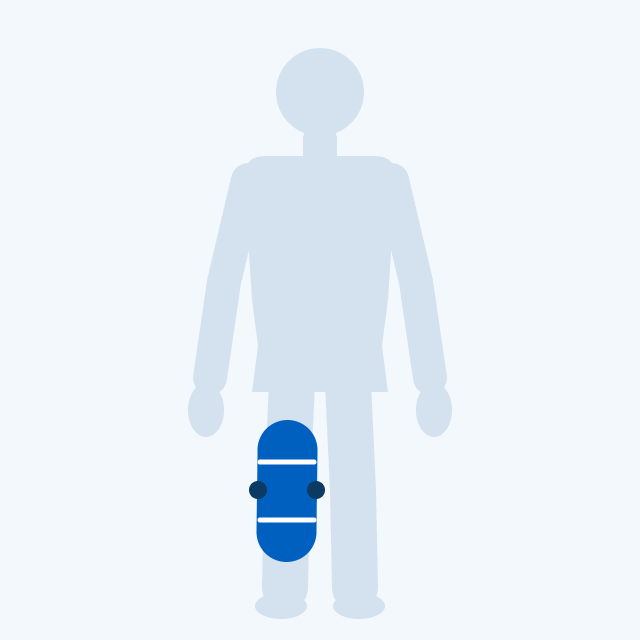
Hinged Ligament Knee Brace
Active adults, athletes and children with knee ligament instability who need side support during daily activity or sport.
A prefabricated hinged brace with rigid side supports that resists excessive side-to-side or rotational movement while allowing normal bending and straightening. Fitted off the shelf in a range of adult and paediatric sizes, it is intended to protect a ligament-deficient or previously injured knee during activity.
- Anatomical hinge tracks the knee's natural motion
- Limits excessive lateral and rotational movement
- Adjustable straps for fit and compression
- Paediatric sizing available

Post-Operative ROM Knee Brace
Patients recovering from knee surgery or significant soft-tissue injury who need controlled, progressive range-of-motion protection.
A prefabricated hinged brace with adjustable range-of-motion stops that protects the knee and supports a gradual, clinician-guided return of movement after surgery or injury, with an option to lock the joint fully immobile. Straps are easy to readjust as post-surgical swelling changes.
- Adjustable ROM hinge stops
- Full immobilisation/lock option
- Easy-adjust straps to accommodate swelling
- Lightweight, washable materials

Patellar Stabilising Knee Brace
People with kneecap tracking problems, subluxation, dislocation, or anterior knee pain who need lateral support during activity.
A prefabricated brace with an adjustable buttress pad or targeted strap that helps guide the kneecap's tracking and resists lateral movement during activity. Fitted off the shelf, it is intended to support the patellofemoral joint and ease anterior knee pain during sport or daily movement.
- Adjustable lateral buttress pad or tracking strap
- Low-profile, breathable materials
- Heat-mouldable hinge stays on select models
- Allows full knee range of motion

Elastic Knee Support Sleeve
People wanting light compression and support for a mildly painful or swollen knee during sport or daily activity.
A knitted elastic sleeve that provides gentle compression and warmth around the knee joint, with light padding at the sides for added support. It is a soft, off-the-shelf alternative to a rigid brace, worn for everyday comfort once a knee condition has moved beyond the acute stage.
- Elastic knitted fabric with gentle compression
- Does not restrict normal knee motion
- Breathable, machine-washable material
- Simple pull-on fit, no straps required
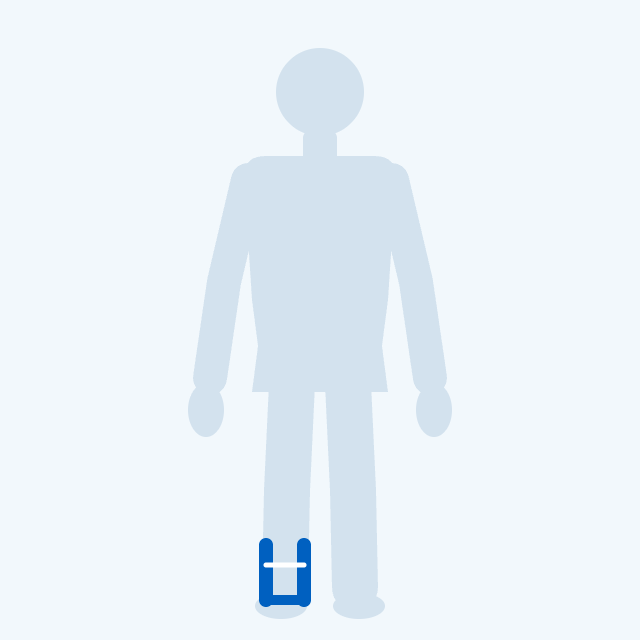
Ankle Stirrup Support Brace
People with ankle sprains, chronic instability, or wanting preventive support during sport.
A semi-rigid prefabricated brace with rigid side stays and adjustable strapping that limits excessive inward/outward ankle movement while still allowing normal walking motion. Fitted off the shelf in standard sizes, it is designed to fit inside most footwear.
- Semi-rigid stirrup shell or side stays
- Figure-8 or lace-up strapping options
- Fits inside most standard footwear
- Available in multiple sizes, no moulding required
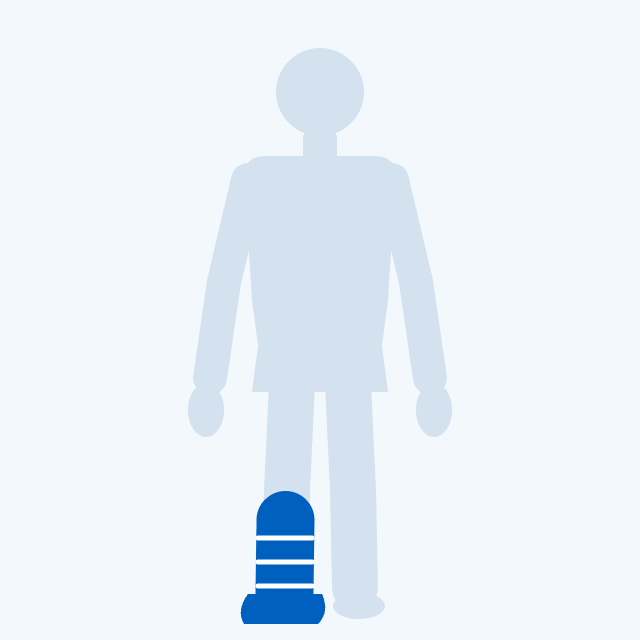
Walker/Fracture Boot
Patients with ankle or foot fractures, severe sprains, or post-surgical needs requiring rigid immobilisation while remaining mobile.
A prefabricated rigid-shell boot that holds the ankle and foot in a controlled position, with a rocker sole to support a smoother, more stable gait during healing. Adjustable air or foam bladders and straps are fitted from a standard size range rather than individually moulded.
- Rigid shell with adjustable straps and air/foam liners
- Rocker outsole for a more natural walking pattern
- Available in multiple heights and sizes
- Removable for wound care or therapy as advised
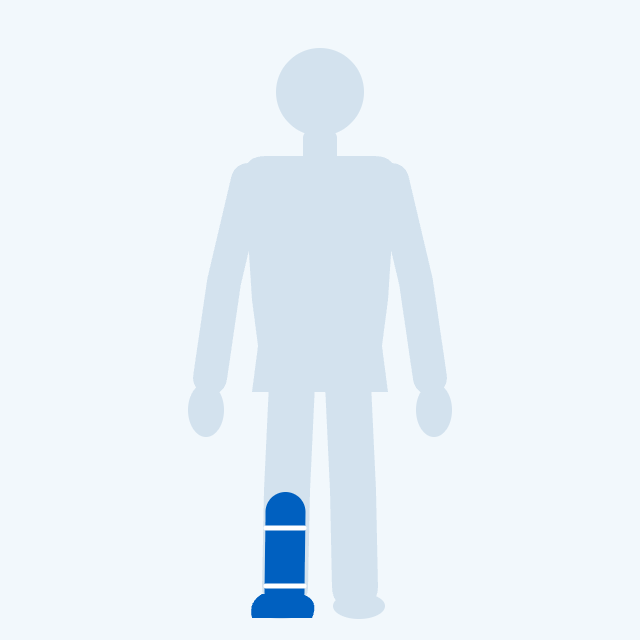
Off-the-Shelf AFO for Drop Foot
Patients with drop foot from neurological or muscular weakness who need help clearing the foot while walking.
A prefabricated ankle-foot orthosis or dynamic strap device that assists dorsiflexion during the swing phase of walking, helping the foot clear the ground and reducing tripping risk. Made from flexible carbon, composite or semi-rigid material, it is selected and sized to the patient without individual moulding.
- Semi-rigid or dynamic-strap dorsiflexion assist
- Low-profile design fits inside standard footwear
- Flexible construction stores and returns energy on select models
- Available in several stiffness/size options
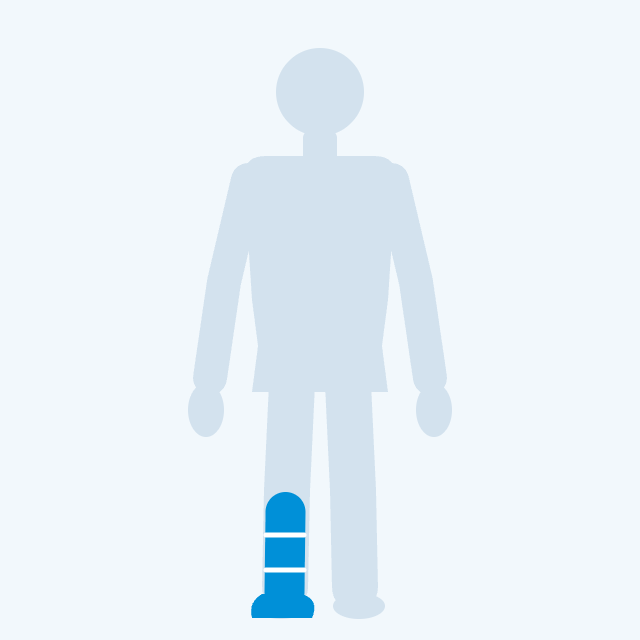
Night Splint (Plantar/Achilles)
Patients with plantar fasciitis, Achilles tendinopathy or chronic calf tightness who need a sustained overnight stretch.
A prefabricated splint worn during sleep that holds the ankle and foot in a neutral or gently dorsiflexed position to maintain a steady stretch of the plantar fascia and Achilles tendon overnight. Fitted off the shelf, it is intended to support recovery from heel and calf-related pain rather than provide daytime mobility.
- Adjustable dorsiflexion angle
- Padded, lightweight shell
- Hook-and-loop closure for comfort adjustment
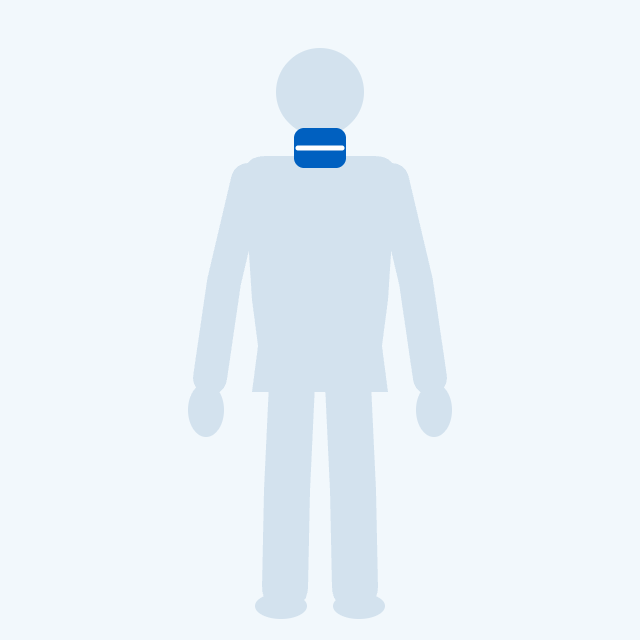
Cervical Collar (Rigid, Adjustable)
Patients requiring neck immobilisation after injury or surgery, or during emergency care; adult and paediatric sizing available.
A prefabricated rigid collar that limits cervical spine movement while relieving pressure at the chin, back of the head and shoulders. Adjustable height settings allow it to be fitted to the individual, with paediatric and emergency-use variants available.
- Adjustable height settings
- Contoured chin and occipital padding for pressure relief
- Tracheal opening for airway access
- Paediatric and emergency-use versions available

Hernia Support Belt
For adults with a reducible inguinal or groin hernia needing comfortable support during daily activity.
A prefabricated support belt with a targeted compression pad that gives a reducible groin hernia gentle support during standing, walking and daily activity. It is designed to ease discomfort and the dragging sensation while surgical review is awaited or not appropriate. It does not repair the hernia itself.
- Targeted, adjustable compression pad
- Single- and double-sided options
- Low-profile fit under clothing
- Support for symptoms; does not repair the hernia

Maternity Support Belt
For pregnancy-related lower back and pelvic girdle pain, providing gentle support as the abdomen grows.
A prefabricated maternity belt that gently lifts and supports the abdomen while stabilising the lower back and pelvis, designed to ease strain during standing, walking and daily activity through pregnancy. Adjustable panels adapt to the body's changing shape in each trimester.
- Gentle abdominal lift with lower-back support
- Adjustable panels adapt through each trimester
- Breathable, low-profile fit under clothing
- Eases pregnancy-related back and pelvic girdle strain

Abdominal Binder (Post-Operative)
For support after abdominal surgery, including caesarean section, and for gentle support of abdominal hernias.
A prefabricated elasticated binder that applies even, comfortable compression around the abdomen to support it after surgery, including when moving, and to give gentle support over an abdominal hernia. Adjustable closures let the fit change as post-surgical swelling settles.
- Even, adjustable abdominal compression
- Supports recovery after abdominal surgery and caesarean section
- Gentle support for abdominal hernias
- Breathable panels for extended daily wear
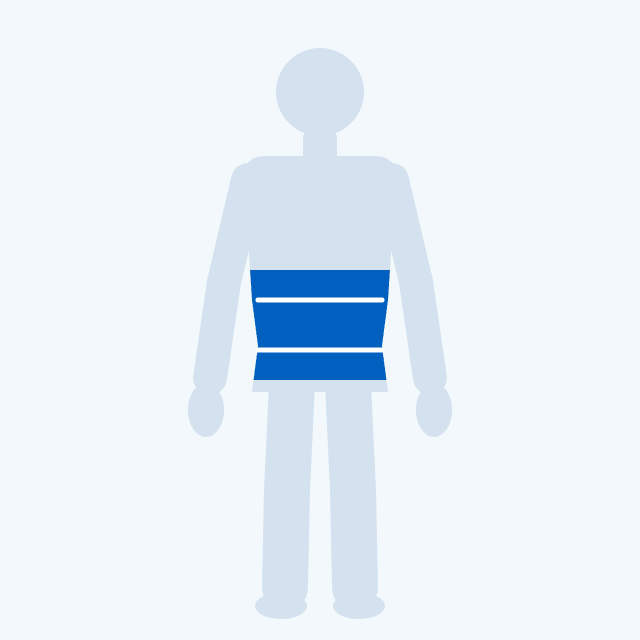
Rigid Lumbosacral Orthosis (LSO)
Patients needing significant immobilisation of the lumbar spine after injury, surgery, or for degenerative conditions.
A prefabricated, low-profile rigid orthosis with contoured anterior and posterior panels that restricts lumbar spine movement to support and protect the lower back. Adjustable closures accommodate changes in swelling or fit during recovery.
- Contoured rigid panels for overall lumbar immobilisation
- Adjustable closure to accommodate swelling
- Low-profile design for wear under clothing
- No custom moulding required

Wrist Splint (Day & Night Support)
Patients with wrist sprains, tendon strain, or carpal tunnel symptoms needing daytime support or overnight rest of the wrist.
A prefabricated splint with a removable rigid or semi-rigid palmar stay that holds the wrist in a neutral or supported position, easing strain on the joint and tendons. Worn during the day for general wrist support or overnight to reduce pressure on the median nerve for those with carpal tunnel symptoms, it leaves the fingers free for hand use.
- Removable rigid/semi-rigid stay holds a neutral position
- Adjustable hook-and-loop straps for a secure fit
- Breathable, low-profile fabric
- No custom moulding required

Thumb Spica Splint
Patients with thumb ligament sprains, joint irritation, or post-injury protection needs at the base of the thumb.
A prefabricated splint that stabilises the thumb and its base joint while leaving the rest of the hand free to move. Fitted off the shelf in standard sizes, it is designed to rest and protect the joint after a ligament sprain or with tendon irritation.
- Rigid or semi-rigid thumb stay
- Adjustable strapping for individual fit
- Leaves the fingers free to move
- Low-profile, comfortable for daily wear
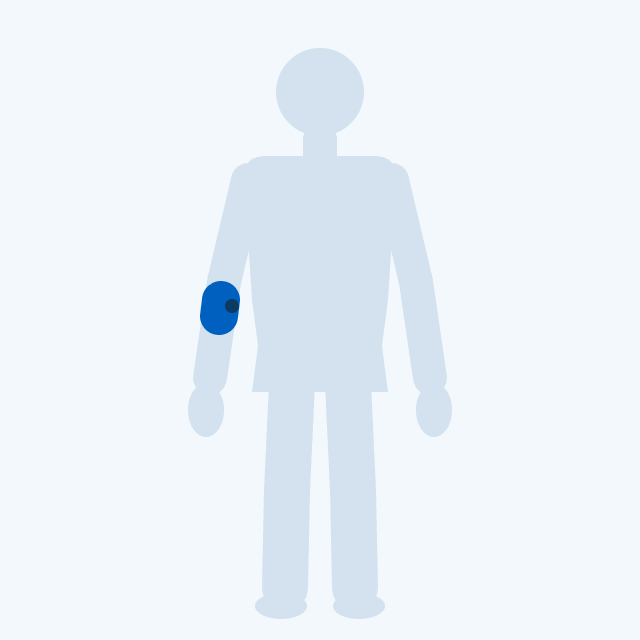
Elbow Support / Epicondylitis Strap
Patients with tennis or golfer's elbow, or general elbow strain, wanting counterforce support during activity.
A prefabricated compression sleeve or counterforce strap that reduces strain on the forearm tendons at the elbow during activity. Available as a broader compression sleeve for general elbow strain or a focused counterforce strap for targeted support with tennis or golfer's elbow.
- Adjustable counterforce strap or compression sleeve options
- Focused pressure pad reduces tendon strain
- Breathable, lightweight materials
- Easy to apply and remove for daily use

Shoulder Immobiliser Sling
Patients recovering from shoulder surgery, such as rotator cuff repair, or significant shoulder injury needing positioned immobilisation.
A prefabricated sling system that supports the weight of the arm and holds the shoulder in a controlled neutral or abducted position to protect healing tissue. Optional abduction or external-rotation pillow attachments allow the position to be adjusted for different recovery protocols.
- Adjustable arm sling with ergonomic strapping
- Optional rigid abduction pillow
- Optional external-rotation pillow
- Breathable padding to reduce pressure points

Elbow ROM Brace
For patients recovering from elbow surgery, fracture or significant soft-tissue injury who need protected, gradually increasing elbow movement.
A prefabricated hinged elbow brace with adjustable range-of-motion stops that control how far the elbow can bend and straighten while healing. The permitted range is set by the clinician and progressively opened as recovery advances, with padded cuffs securing the brace to the upper arm and forearm.
- Adjustable ROM hinge with flexion/extension stops
- Lockable at a fixed angle where required
- Padded, adjustable upper-arm and forearm cuffs
- Lightweight frame fitted off the shelf

Posture Support Brace (Thoracic)
For rounded-shoulder posture and upper-back muscular strain.
A prefabricated posture brace gently draws the shoulders back and supports the thoracic spine in a more upright alignment, designed to ease muscular strain in the upper back. It acts as a supportive reminder to sit and stand taller rather than permanently altering spinal structure.
- Draws the shoulders into a more upright posture
- Eases upper-back muscular strain
- Lightweight and wearable under clothing
- Adjustable, low-profile fit
Our Clinical Approach
All devices are recommended following clinical assessment to ensure they are appropriate for your condition, goals, and activity level. We provide guidance on use, application, and progression.
Related reading
- Are Custom Orthotics Worth It?
The honest, evidence-based answer is: it depends on why your feet hurt. Here's when a pharmacy insole is genuinely enough, and when a clinician-assessed custom orthosis is worth the extra cost.
- Can Orthotics Fix Flat Feet Permanently?
Orthotics can ease the pain and strain of flat feet, but they don't reshape an adult arch permanently. Here's what the evidence actually says, and when flat feet need proper treatment.
- Do I Need a Referral to See an Orthotist or Prosthetist in South Africa?
You can book directly with an HPCSA-registered orthotist or prosthetist in South Africa without a referral. It's medical aid funding, not the consultation, that usually needs a doctor's prescription.
Ready to get started?
Contact us to book an assessment or discuss your needs
Common questions
Knee, Back and Ankle Braces in Sandton: your questions answered
Sources are linked in the answers and were last checked on 14 November 2026.