
Wheelchairs, Walkers and Mobility Aids
Supporting safe movement and independence at home and in the community
What is it?
Mobility aids are assistive devices prescribed to support safe movement in the home and community. They are selected based on your physical condition, environment, and functional goals to promote independence and reduce fall risk.
How can it help?
- Improving walking safety and stability
- Preventing falls and injuries
- Supporting transfers from bed, chair, or toilet
- Improving independence at home
- Reducing fatigue during movement
- Supporting early discharge from hospital
Devices We Provide
A selection of the devices we fit within this service. Filter by area of the body to find what fits your needs. The right device is always confirmed after an individual assessment.
Active Rigid-Frame Manual Wheelchair
For active self-propelling users who want a lightweight, responsive everyday wheelchair.
A lightweight, rigid-frame manual wheelchair designed for users who self-propel for most or all of their daily mobility. Seating position, wheel camber and frame dimensions can be individually configured to support efficient, comfortable propulsion. It is intended for active daily use rather than short-term or occasional support.
- Lightweight rigid or folding frame
- Individually adjustable seat position and wheel camber
- Wide range of sizing and accessory options
- Built for efficient self-propulsion
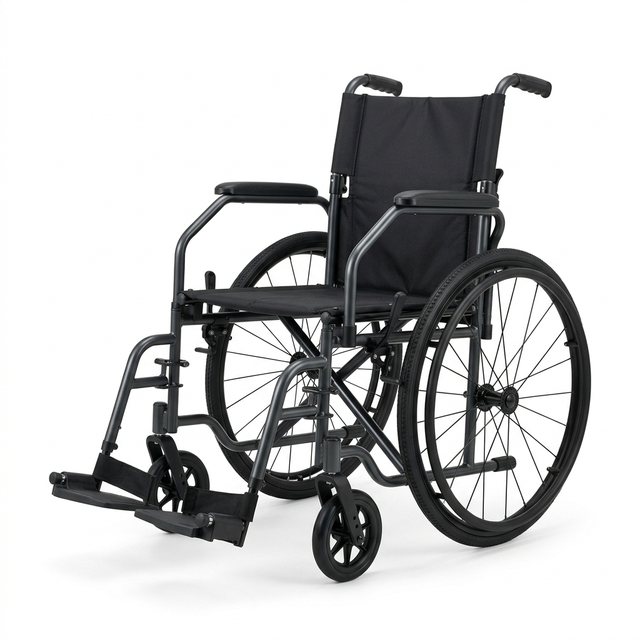
Standard/Attendant-Propelled Wheelchair
For patients needing an easy-to-fold, transportable wheelchair that can be self-propelled or pushed by a caregiver.
A folding-frame manual wheelchair that provides a practical, general-purpose mobility solution for self-propulsion or attendant use. It folds compactly for transport and storage, supporting users with general, temporary or assisted mobility needs.
- Folding frame for easy transport and storage
- Push handles for attendant propulsion
- Removable or swing-away footrests and armrests
- Available in a range of seat widths
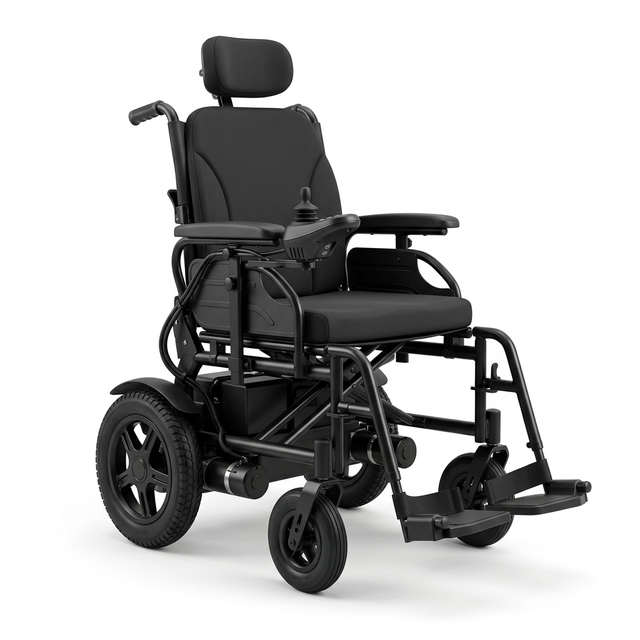
Power Wheelchair
For patients who cannot self-propel a manual wheelchair or need to conserve energy for daily activities.
A battery-powered wheelchair controlled by a joystick or alternative interface, providing independent mobility indoors and outdoors for users with significant mobility limitations. Seating, positioning and control options are individually configured to match the user's physical ability and daily needs.
- Battery-powered drive with joystick or alternative control
- Adjustable seating and positioning options
- Suitable for indoor and outdoor use
- Configured to individual ability and control needs
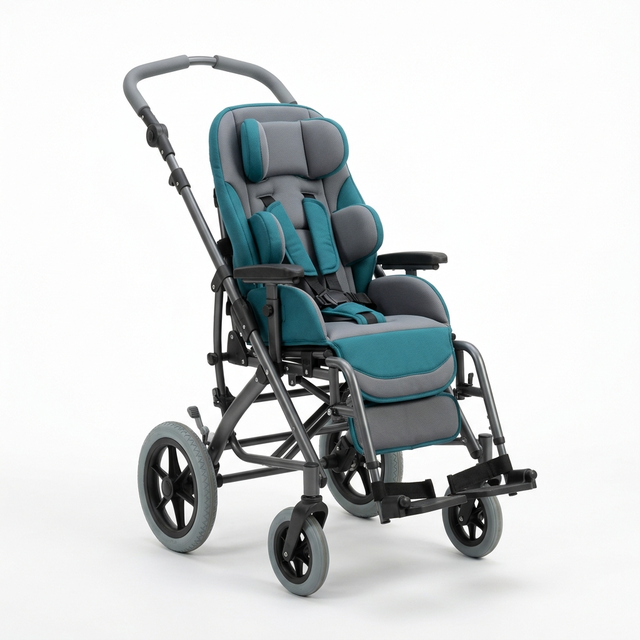
Paediatric Wheelchair / Rehab Buggy
For children with disabilities who need supportive seating and mobility from infancy through adolescence.
A supportive, adjustable seating and mobility system sized for children who cannot walk independently. It can be reconfigured as the child grows and may include tilt-in-space and postural support features, available in manual or powered versions.
- Adjustable seating to accommodate growth
- Tilt-in-space option for pressure relief
- Supportive positioning components such as headrests and trunk supports
- Available in manual or powered options
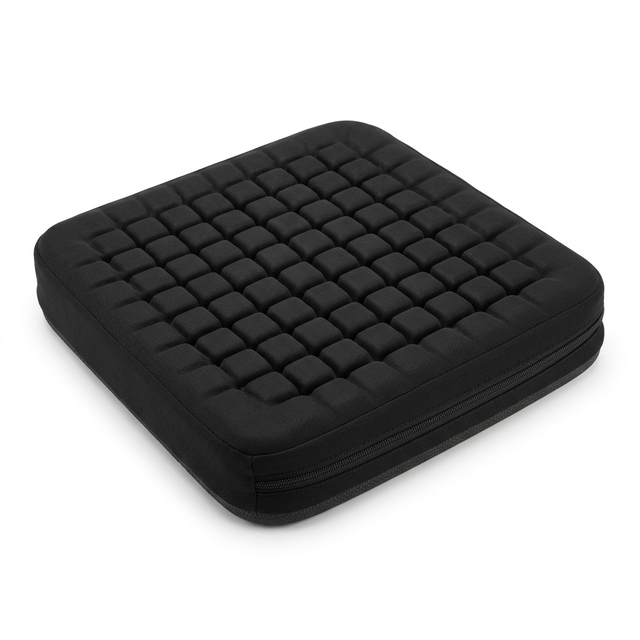
Wheelchair Seating & Positioning System
For wheelchair users who need additional postural support, pressure relief or comfort beyond a standard seat.
A set of cushions, backrests and positioning components fitted to a wheelchair to help distribute pressure, support posture and reduce the risk of skin breakdown. Components are individually selected and configured to the user's seating and pressure-care needs.
- Pressure-relieving cushion options
- Adjustable or contoured backrests
- Postural support components such as lateral supports and headrests
- Compatible with most wheelchair frames
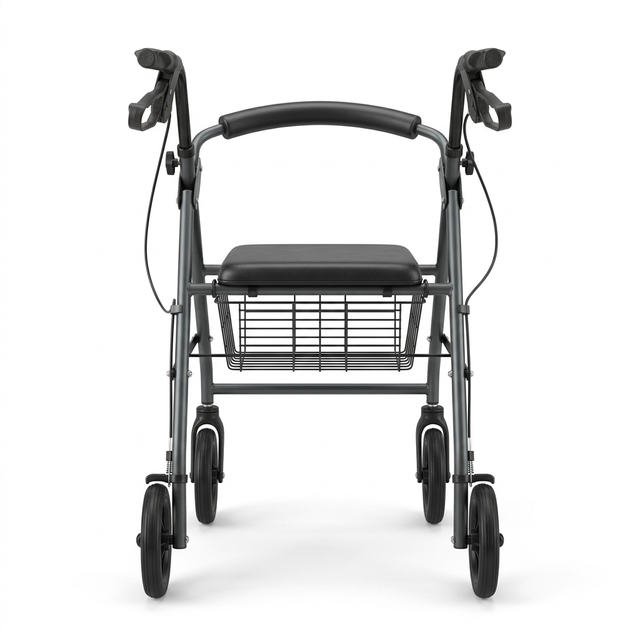
Rollator (Four-Wheeled Walking Frame)
For patients who need walking support with the option to rest during outdoor mobility.
A four-wheeled walking frame with handbrakes and, often, a built-in seat, offering support and stability while walking as well as a place to pause and rest. Handle height is adjusted to the individual user for a comfortable, supported walking posture.
- Four wheels for smooth rolling support
- Hand-operated brakes for control
- Fold-down seat and storage basket often included
- Height-adjustable, foldable frame
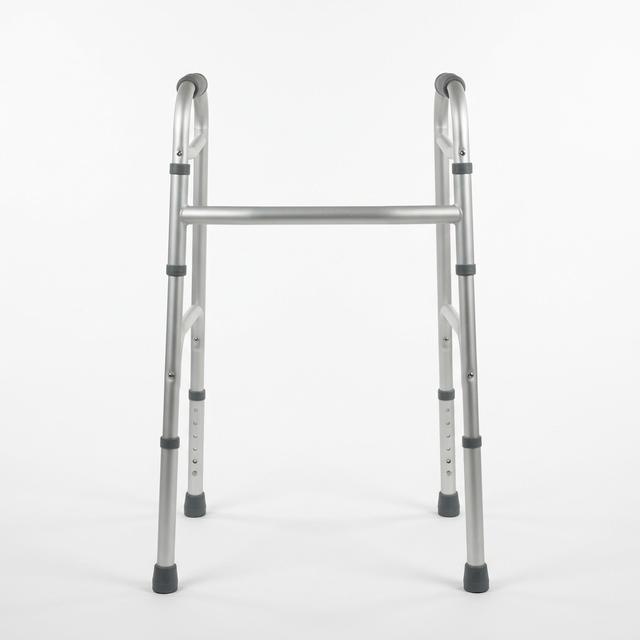
Standard Walking Frame
For patients needing maximum stability while walking, more than a rollator or cane provides.
A lightweight metal frame that the user lifts and moves forward to create a wide, stable base of support while walking. It is height-adjusted to the individual and typically used for short-distance mobility, such as early post-operative walking.
- Wide, stable four-point base
- Lightweight, height-adjustable frame
- Non-wheeled or two-wheeled variants available
- Suited to short-distance indoor mobility
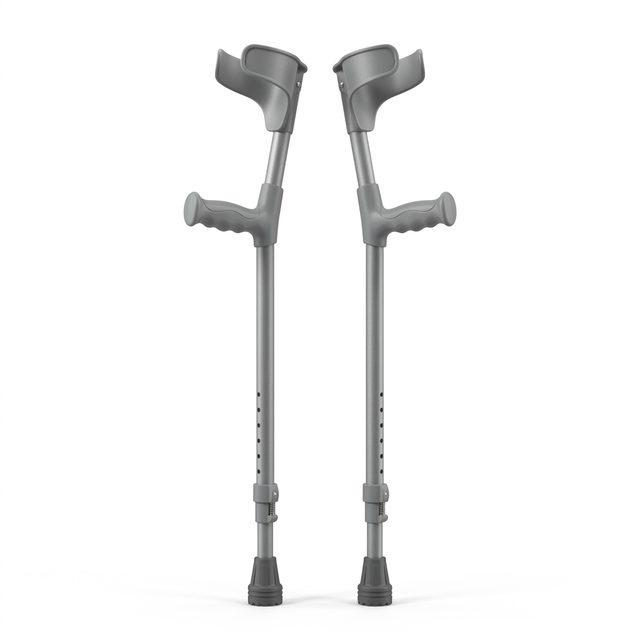
Forearm Crutches
For patients needing longer-term or more mobile support than a walking frame, while keeping their hands free for other tasks.
A pair of crutches with a forearm cuff and handgrip that transfer weight from the leg to the arms during walking, allowing a more natural and faster gait than a walking frame. Shaft height is adjusted to the individual user.
- Forearm cuff plus handgrip for weight transfer
- Height-adjustable shaft
- Supports a more natural, faster walking pace than a frame
- Lightweight and manoeuvrable on stairs
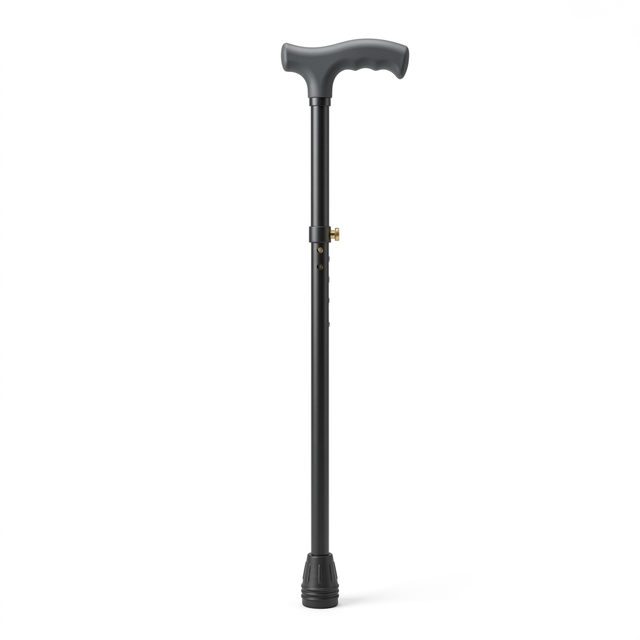
Walking Stick / Cane
For patients needing mild additional balance support or to offload one leg.
A single-point walking aid that provides extra ground contact to improve balance and reduce load on a painful or weak leg. It is height-adjusted to the individual and typically used on the side opposite the affected leg.
- Height-adjustable shaft
- Single-point or multi-point (quad) base options
- Ergonomic handle for comfortable grip
- Lightweight and easy to carry
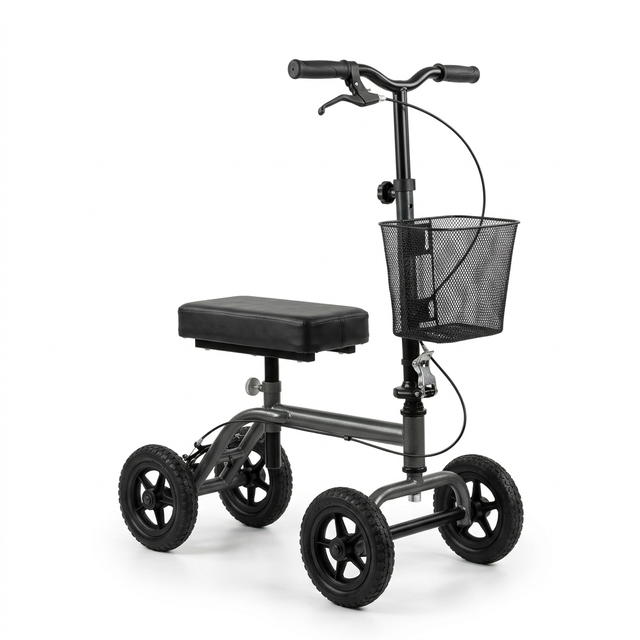
Knee Scooter (Rolling Knee Walker)
For patients who cannot bear weight through one foot or lower leg but want more mobility than crutches allow.
A wheeled mobility device with a padded platform that supports the injured lower leg while the user propels themselves with the uninjured leg. It offers an alternative to crutches during non-weight-bearing recovery.
- Padded knee platform supports the lower leg
- Wheeled base propelled by the opposite leg
- Hand brakes for control
- Height-adjustable platform and handlebars
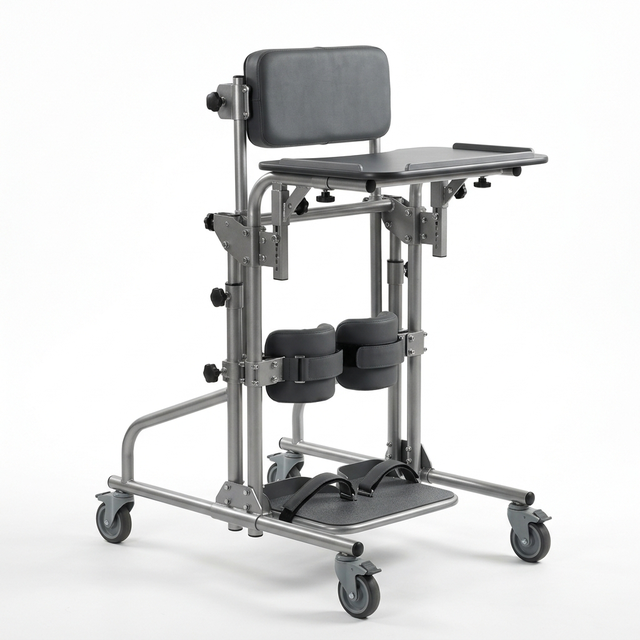
Standing Frame
For patients who cannot stand independently but benefit from regular supported standing.
A frame that supports a person in an upright position using straps and padded supports, enabling supervised standing time even without independent walking ability. It is adjusted to the individual's size and used for defined periods as part of a therapy programme.
- Padded supports at the knees, hips and trunk
- Adjustable height and support configuration
- Static or mobile base versions available
- Suitable for paediatric and adult users
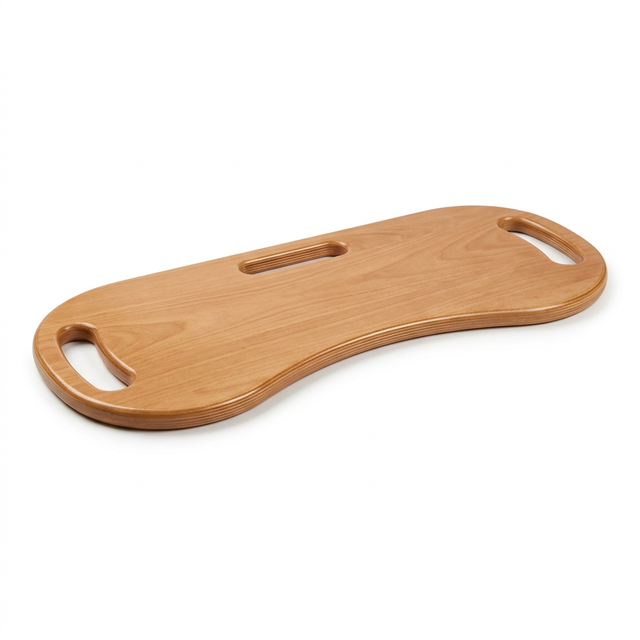
Transfer Board
For patients who need help moving safely between a wheelchair and another surface, such as a bed or car seat.
A smooth, rigid board that bridges the gap between two surfaces, allowing a person to slide across rather than stand and pivot during a transfer. It helps reduce physical strain on both the patient and any assisting caregiver.
- Smooth, low-friction surface for sliding transfers
- Rigid construction to safely bear body weight
- Lightweight and portable
- Available in various lengths for different transfer needs
Our Clinical Approach
Our approach focuses on functional assessment in your home or hospital setting. We evaluate your physical abilities, environment layout, and daily routines to ensure mobility aids are appropriate, safe, and support long-term independence.
Related reading
- Does Medical Aid Cover Prosthetics and Orthotics in South Africa?
Most South African medical aids do cover prosthetics and orthotics, but the rand amount, the paperwork and the co-payment can catch patients off guard. Here is how the funding actually works.
- Do Orthotists Do Home Visits? What Happens at a Home or Bedside Appointment
Yes, orthotists do home visits. Assessment, measuring, casting and most fittings can all be done in your own home or at a hospital bedside. Only the making of a custom device needs a workshop.
- Can you walk normally with a prosthetic leg, and how long does it take to learn?
Most people can learn to walk confidently with a prosthetic leg, though "normal" looks different for everyone. Here's what shapes the timeline, and what physio and prosthetic rehab actually involve.
Ready to get started?
Contact us to book an assessment or discuss your needs
Common questions