
Prosthetic Limb Fitting in Sandton

Restoring mobility, function, and independence following limb loss

What is it?

Prosthetics are externally applied medical devices used to replace a missing limb or body part following amputation, trauma, or congenital limb difference. They are carefully designed and fitted to restore mobility, daily function, and independence.

How can it help?

  • Walking and standing safely
  • Performing self-care tasks independently
  • Improving balance and stability
  • Returning to work or school
  • Participating in sport or recreation
  • Enhancing body symmetry and posture
  • Improving confidence and independence

Devices We Provide

A selection of the devices we fit within this service. Filter by area of the body to find what fits your needs. The right device is always confirmed after an individual assessment.
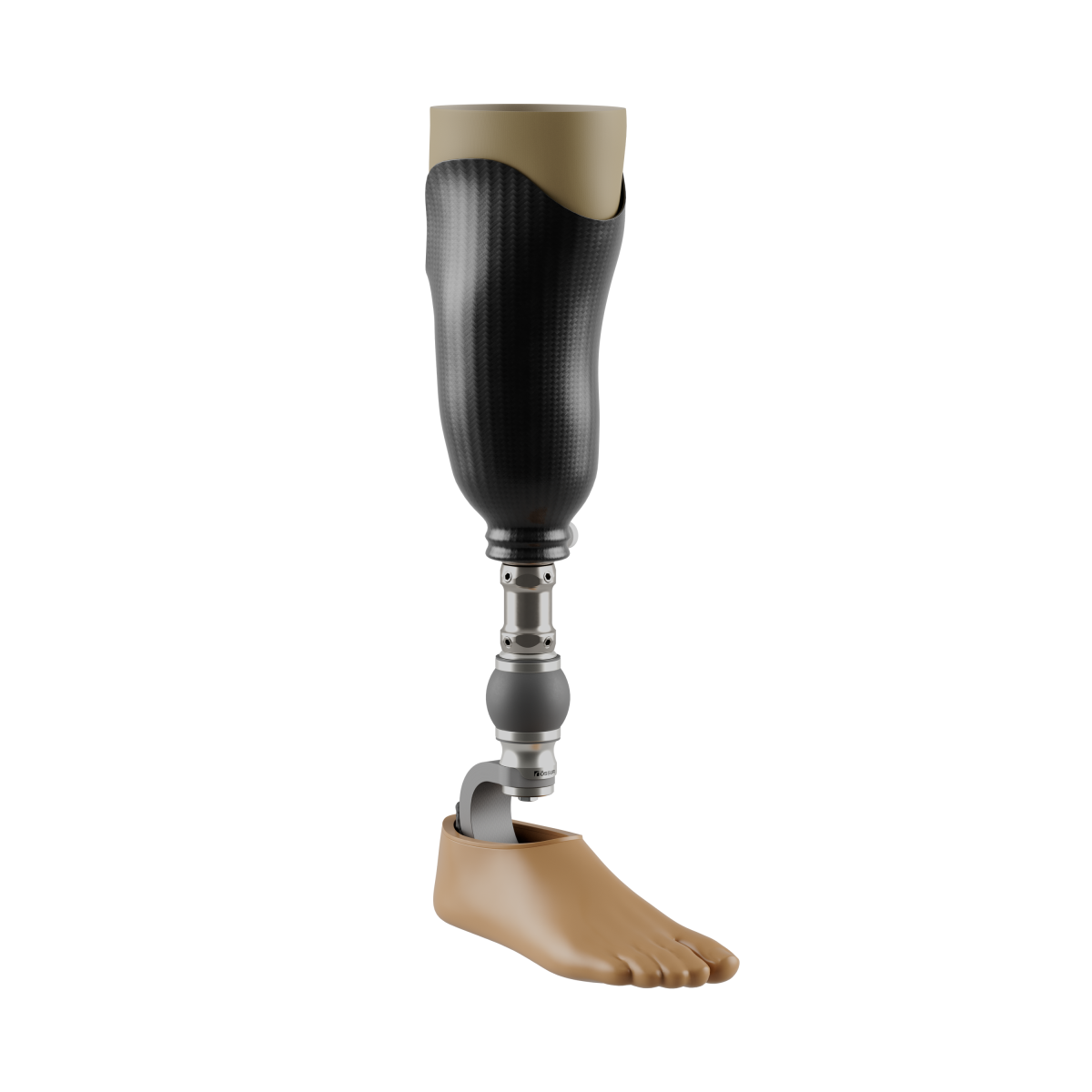
Lower LimbLower Limb Prosthetics (Above-Knee, Below-Knee & Partial Foot)

Lower Limb Prosthetics (Above-Knee, Below-Knee & Partial Foot)

For individuals with an above-knee, below-knee or partial foot amputation who want to stand, walk and return to daily activity.

A complete lower limb prosthesis custom-built around an individually moulded socket, restoring weight-bearing, balance and a natural walking pattern. Every component is selected and aligned by the prosthetist based on your assessment, mobility goals and lifestyle. You don't need to choose parts yourself.

  • Above-knee (AK), below-knee (BK) and partial foot solutions
  • Individually cast, custom-moulded socket for comfort and control
  • Componentry selected by the prosthetist to match your mobility goals
  • Ongoing alignment, adjustment and review included
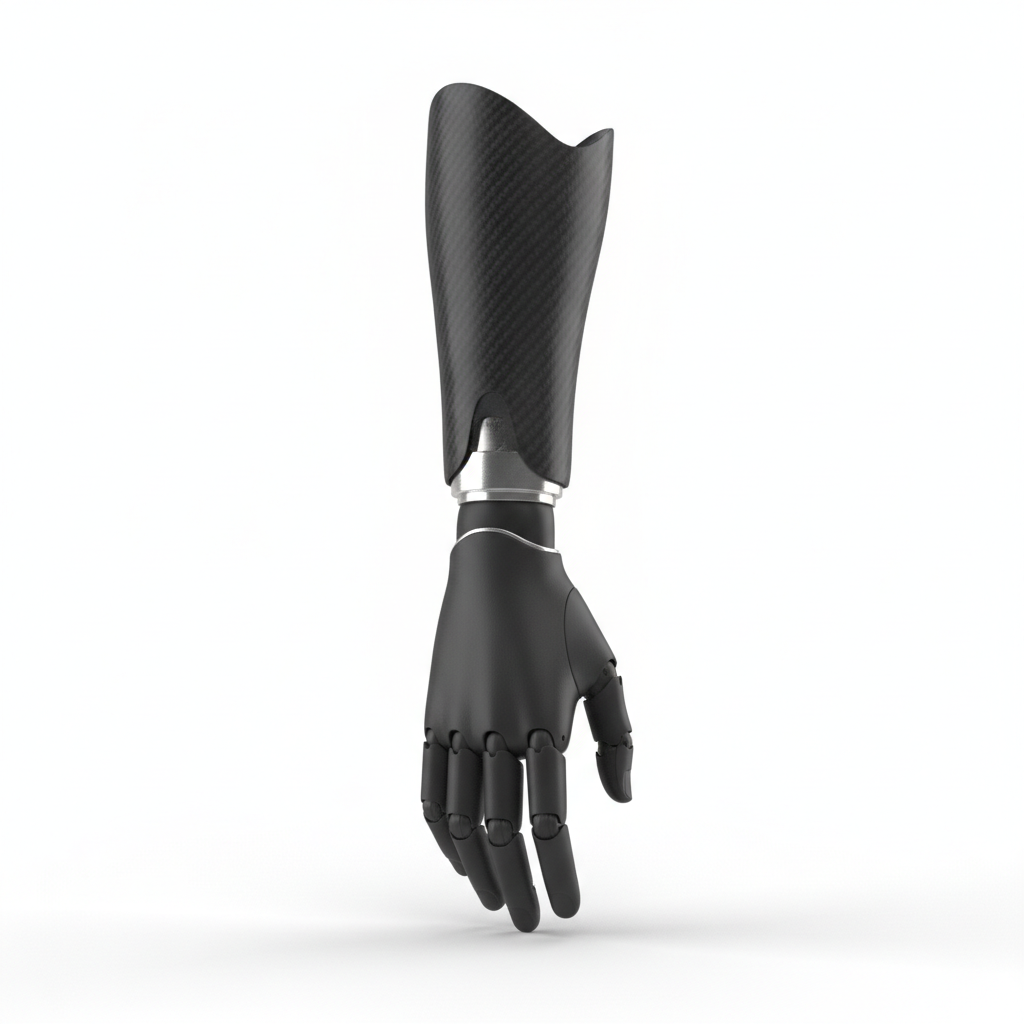
Upper LimbUpper Limb Prosthetics (Transhumeral & Transradial)

Upper Limb Prosthetics (Transhumeral & Transradial)

For individuals with an amputation above the elbow (transhumeral) or below the elbow (transradial) seeking restored function and appearance.

A complete arm prosthesis custom-built around an individually moulded socket, restoring balance, function and confidence after upper limb loss. Functional and cosmetic options are recommended by the prosthetist according to your assessment, daily tasks and personal goals.

  • Above-elbow (transhumeral) and below-elbow (transradial) solutions
  • Individually moulded socket for a secure, comfortable fit
  • Functional and cosmetic options guided by assessment
  • Fitting, training and ongoing review included
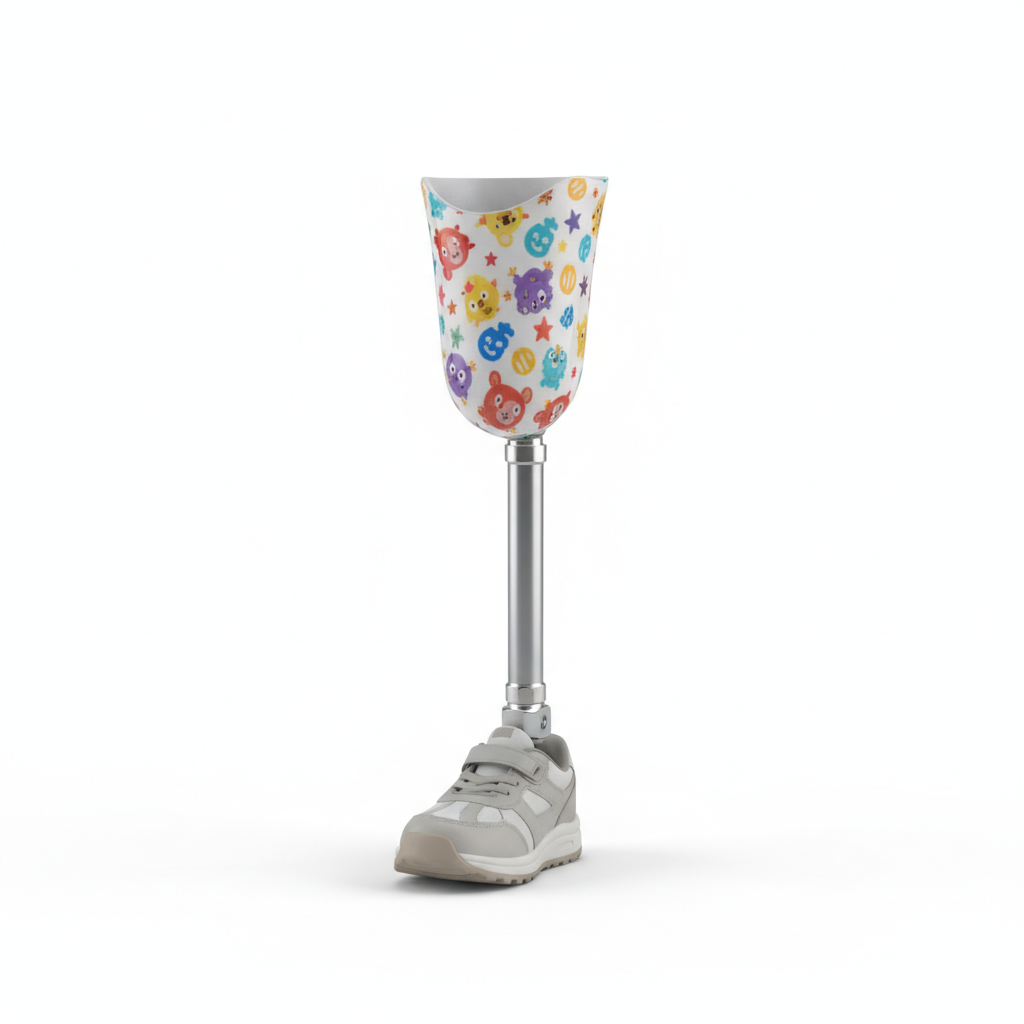
Full BodyPaediatric Prosthetics (Upper & Lower Limb)

Paediatric Prosthetics (Upper & Lower Limb)

For children with limb loss or limb difference who need a prosthesis built for growth, play and development.

Complete upper and lower limb prostheses designed around a child's growing body and changing activity levels. Sockets and components are selected for lightweight durability and adjusted or replaced as the child grows, with regular reviews supporting every developmental stage.

  • Upper and lower limb solutions for children
  • Lightweight, growth-accommodating designs
  • Planned adjustment and replacement as the child grows
  • Family-centred fitting and follow-up

Our Clinical Approach

Our approach begins with a comprehensive assessment of your physical condition, rehabilitation goals, daily environment, and functional needs. We conduct mobile home or hospital assessments where needed to ensure your prosthetic device supports real-world use and long-term independence.

Related reading

Ready to get started?

Contact us to book an assessment or discuss your needs

Common questions

Prosthetic Limb Fitting in Sandton: your questions answered

How much does a prosthetic leg cost in South Africa?

There is no fixed price for a prosthetic leg, and any website quoting a single figure is guessing. Cost is driven by two things: the socket, which is custom made to your residual limb and carries most of the clinical time, and the componentry bought in from manufacturers, chiefly the foot and, for an above-knee limb, the knee joint. Össur South Africa makes the same point, that there is no standard residual limb and therefore no standard price. An above-knee prosthesis costs more than a below-knee one because a knee is added to the build. We quote in writing, itemised, after assessing you and before anything is ordered.

Does medical aid cover a prosthetic leg?

Most South African medical schemes contribute towards a prosthetic limb, but few cover the full cost of an advanced build. Cover usually comes from an annual external appliance or external prosthesis benefit with its own rand limit. The South African Orthotic and Prosthetic Association reports those limits ranging from roughly R3,000 to R55,000 depending on scheme and plan, excluding ex gratia and Prescribed Minimum Benefit funding, and notes that amputation sits on the PMB list, which can unlock funding outside the annual limit. Schemes must respond to a PMB application within 60 days, but they apply the rules inconsistently, so we prepare the clinical motivation, coding and itemised quotation before anything is ordered.

How do I get a prosthetic leg for free in South Africa?

Through the state system, by referral rather than by walking in. In the Western Cape, for example, the published route starts with a physiotherapy assessment at your local community health centre, then an amputee clinic at a referral hospital, then measuring at the provincial orthotic and prosthetic centre. Other provinces run their own version through the treating hospital. Be realistic about the wait. A 2025 African Journal of Disability study of state prosthetic services recorded users waiting three to four years to be measured, with fewer than half the clinical posts filled at the centres studied. If your limb loss followed a road accident or a workplace injury, the Road Accident Fund and COIDA are separate routes worth checking first.

Can I just buy a prosthetic leg online?

No, because the part that makes a prosthesis work cannot be bought off a shelf. The socket is moulded to your residual limb, and almost all of the comfort, control and skin safety comes from it. Feet, knees and hands are bought in from manufacturers, but they still have to be chosen and aligned to you. What you can sensibly buy yourself are the consumables: prosthetic socks in different plies, shrinkers and skin care. Sock ply is meant to change as your limb volume changes through the day, so keeping your own stock of socks is normal practice rather than something that needs an appointment.

How long after an amputation can I get my prosthetic leg?

Usually two to six months for a definitive limb, though many people are walking in a temporary one well before that. The Amputee Coalition puts definitive fitting at two to six months after surgery, once the incision has healed completely and the swelling has come down, and notes that some people receive a temporary prosthesis within two to three weeks. The limb keeps changing for far longer: the Merck Manual notes that a residual limb continues to mature for 18 to 24 months. So the date is set by how your limb heals, not by a calendar. We assess in hospital or at home when travelling is not yet realistic.

My prosthetic leg is rubbing and sore. Is that normal?

No. Rubbing and soreness mean the fit needs attention, not perseverance. The Merck Manual is blunt about it: pain is the first indication of a problem, the prosthesis should come off so the skin can be inspected, and continuing to wear it causes more serious skin damage and can lead to infection. Check your skin at least once a day, and several times a day if diabetes or neuropathy has dulled your sensation. Some daily change in limb volume is normal, and adding or removing a sock ply is the first thing to try. If that no longer settles it, the socket needs adjusting or remaking.

Is a bionic hand better than a hook or a basic prosthetic hand?

Not automatically, and the evidence does not show a myoelectric hand being kept more often than a simpler one. A review in PLOS One estimated adult rejection at 23% for myoelectric arms and 27% for body-powered ones, so the expensive option is not markedly more likely to be kept. The same review found that commercially available multi-grip hands scored poorly on how intuitive they were to control, and that a simple body-powered solution outperformed more advanced systems in Cybathlon competition. Devices get abandoned for lack of function, control complexity and discomfort, not for lack of technology. Choose against the tasks you actually need to do at work and at home.

How often does a prosthetic leg need to be replaced?

Plan on roughly five years for the mechanical components, sooner for the socket, and far sooner for a growing child. Össur South Africa states that you can expect to replace the mechanical components approximately every five years, and the Road Accident Fund generally funds a new prosthesis on about the same five-year cycle. The Amputee Coalition is more cautious, putting the working life of a prosthesis at anywhere from several months to several years depending on age, activity level and growth. Sockets are replaced more often than components, particularly in the first year and in children, which is why young patients are reviewed on a much shorter cycle.

Is this a private practice, and how does payment work?

Yes. Farida Cajee-Botes is a private orthotic and prosthetic practice, and we do not bill medical schemes directly. Accounts are settled in full at the time of your assessment or on collection of your device, and we give you a detailed invoice with the appropriate codes so you can submit the claim to your medical aid and be reimbursed directly by them. Where it helps your claim, we prepare the itemised quotation, clinical motivation and pre-authorisation paperwork before anything is ordered. What your scheme pays back depends on your plan and available benefits, and that decision rests with the scheme, so any amount they do not cover remains payable by you.