
Why the confusion exists
Orthotics and prosthetics is a recognised health profession in South Africa, and practitioners must be registered with the Health Professions Council of South Africa (HPCSA) under the Health Professions Act, in the same regulatory framework that covers doctors, physiotherapists and occupational therapists (SAOPA; South African Government). That registration means an orthotist or prosthetist is a qualified clinician in their own right, trained in assessment, prescription of appropriate devices, fitting, and follow-up care, not a technician waiting on someone else's instructions.
Where things get murky is funding. Medical schemes decide what they will pay for, and they typically want to see a clinical rationale attached to a claim before releasing money for a costly device such as a limb prosthesis, a spinal brace, or custom footwear. That rationale usually comes in the form of an ICD-10 diagnostic code and a supporting letter or prescription from a referring doctor. The Council for Medical Schemes is explicit that claims are processed against a diagnosis code, and that using the wrong code, or none at all, can mean a claim is paid from the wrong benefit, or not paid at all. So the referral requirement you may have heard about is really a billing and authorisation step, sitting between your assessment and the scheme's decision to fund the device.
Where a referral genuinely helps
Even though it is not compulsory to walk through our door, a referral from your GP, orthopaedic surgeon, oncologist, vascular surgeon, or other treating doctor is still valuable in several situations. Medical aid funding: most schemes have a defined prosthetic or external medical device benefit, and some claims may qualify as Prescribed Minimum Benefits (PMB) if the underlying condition is on the PMB list. A prescription and supporting medical letter make it far easier for your prosthetist to motivate the claim on your behalf (Össur South Africa). Complex or post-surgical cases: if you are newly amputated, recovering from a fracture, or managing a condition with active medical involvement (diabetes, vascular disease, a tumour), your prosthetist or orthotist will want to coordinate with your treating doctor regardless of paperwork, simply for safe, joined-up care. Road Accident Fund (RAF) and workplace injury (COIDA) claims, and ex gratia requests to a medical scheme, generally require formal medical documentation and motivation as part of the claims process (Össur South Africa).
Research into South Africa's private lower-limb prosthetic sector has found the funding pathway itself is often inconsistent, with patients relying heavily on their prosthetist to navigate scheme requirements (PMC: lower limb prosthetic guidelines in SA private healthcare). In practice, the earlier your prosthetist or orthotist can see you and start the authorisation conversation with your scheme, the less likely you are to face unnecessary delays, another reason to book the initial assessment without waiting on paperwork.
What happens at the first appointment
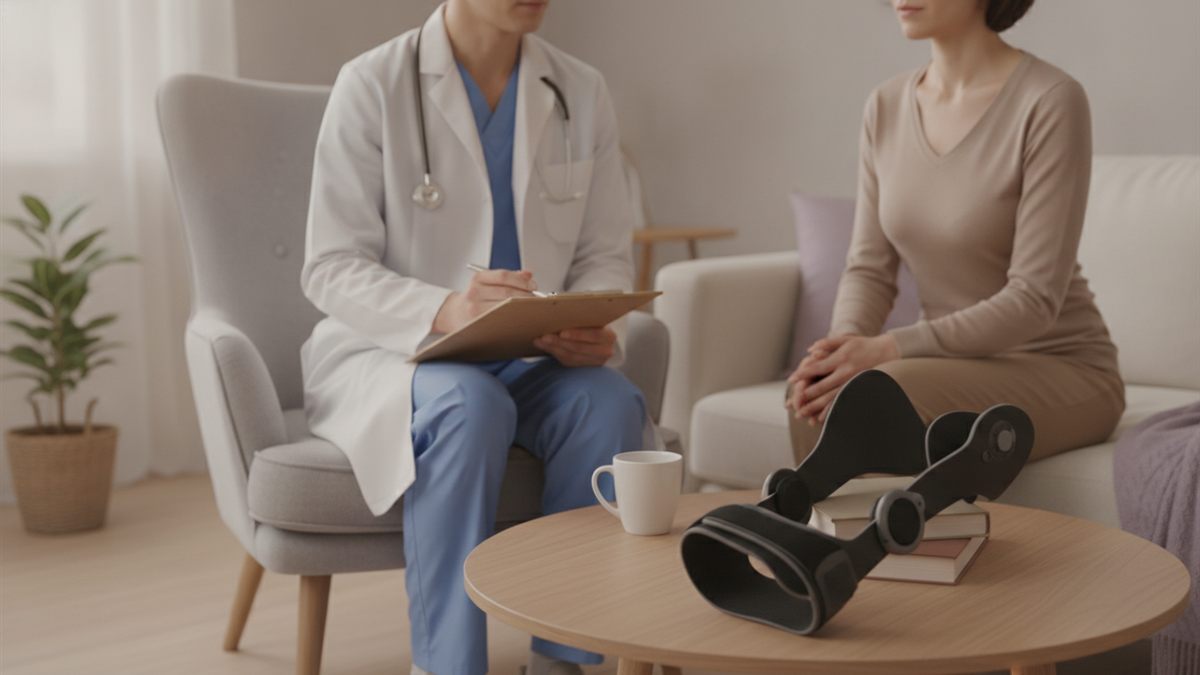
A first visit is an assessment, not a fitting; nothing is manufactured or handed over on day one. Expect your practitioner to take a history (your diagnosis, surgery or injury details, other medical conditions, and your goals such as walking distance, work, sport, or driving); examine the affected limb or area, including skin condition, residual limb shape and length, joint movement, muscle strength, and how you currently move or compensate; discuss options, realistic timeframes, and what device or orthosis category is likely to support/offload/stabilise your particular need; take measurements, casts, or scans if a custom device such as custom orthotics or a prosthesis is indicated, or point you toward suitable off-the-shelf orthotics or compression garments where a custom solution isn't necessary; and explain the medical aid process, likely next steps, and roughly how many further visits to expect before delivery.
What to bring: your ID and medical aid card, any existing referral letter or prescription, recent surgical or discharge notes, current medications, scans if available, and (if relevant) your current brace or prosthesis for comparison. Loose, easily removable clothing makes examining the limb quicker.
Making sure you're in the right place
Because "foot and lower-limb care" is split across several professions, it helps to know who does what before you book. An orthotist/prosthetist (HPCSA-registered), the professional this article is about, designs, fits, and reviews orthoses (braces, splints, insoles, spinal supports) and prostheses (artificial limbs) (Cleveland Clinic). A podiatrist focuses specifically on the foot and ankle: skin, nails, biomechanics, and non-surgical foot pathology. An orthopaedic surgeon is a medical doctor who diagnoses and surgically treats musculoskeletal conditions across the whole body, and who may prescribe an orthosis or prosthesis as part of your broader treatment plan.
If your main issue is surgical (a fracture needing fixation, a joint replacement, or a decision about amputation), you'll need an orthopaedic surgeon or treating specialist first, and we're glad to work alongside them once a device is indicated. If you already know you need a brace, insole, compression garment, or limb prosthesis fitted, measured, or reviewed, you're in the right place.
When to see an orthotist or prosthetist
If you've been told you need an orthosis or prosthesis, an existing device no longer fits well, or you're simply unsure which professional you need, it's reasonable to start with a direct consultation rather than wait on a referral. We offer mobile home and hospital visits across Centurion and the greater Gauteng area for patients who find travel difficult. Check our conditions page if you'd like to confirm your particular need is one we commonly manage, and bring a doctor's letter or medical aid details if you have them, but don't let their absence delay you.
This article is general information for the South African public and is not a substitute for individual clinical assessment or advice; medical scheme rules, benefit limits, and PMB eligibility vary by scheme and plan, so always confirm your specific cover with your own medical aid. To find out where you stand, book an assessment with us and we'll help you work out the right next step, including what your medical aid will need from you.
Key takeaways
- No referral is required to book a consultation with an HPCSA-registered orthotist or prosthetist in South Africa. You can self-refer directly.
- A doctor's prescription or motivation letter is usually needed for medical scheme funding of the device itself, not for the initial assessment.
- Claims are processed against ICD-10 diagnosis codes, so accurate documentation from a referring doctor speeds up medical aid authorisation.
- Your first appointment is an assessment (history, examination, measurements, and a funding/next-steps discussion). No device is fitted on day one.
- Orthotists/prosthetists, podiatrists, and orthopaedic surgeons have distinct, complementary roles. Know which one matches your need before booking.
Have a question about your own situation?
Every device we provide starts with an individual assessment: at home, in hospital, or at the practice.
References
- SAOPA – South African Orthotic & Prosthetic Association (SAOPA)
- Prescribed Minimum Benefits (Council for Medical Schemes)
- Financial Considerations | Information for Amputees (Össur South Africa)
- Exploring the need for lower limb prosthetic guidelines in South Africa's private healthcare sector (PMC (National Library of Medicine))
- What Is the Difference Between an Orthotist and a Prosthetist? (Cleveland Clinic)
- Register as a health professional (South African Government (gov.za))