
Can Orthotics Permanently Fix Flat Feet?
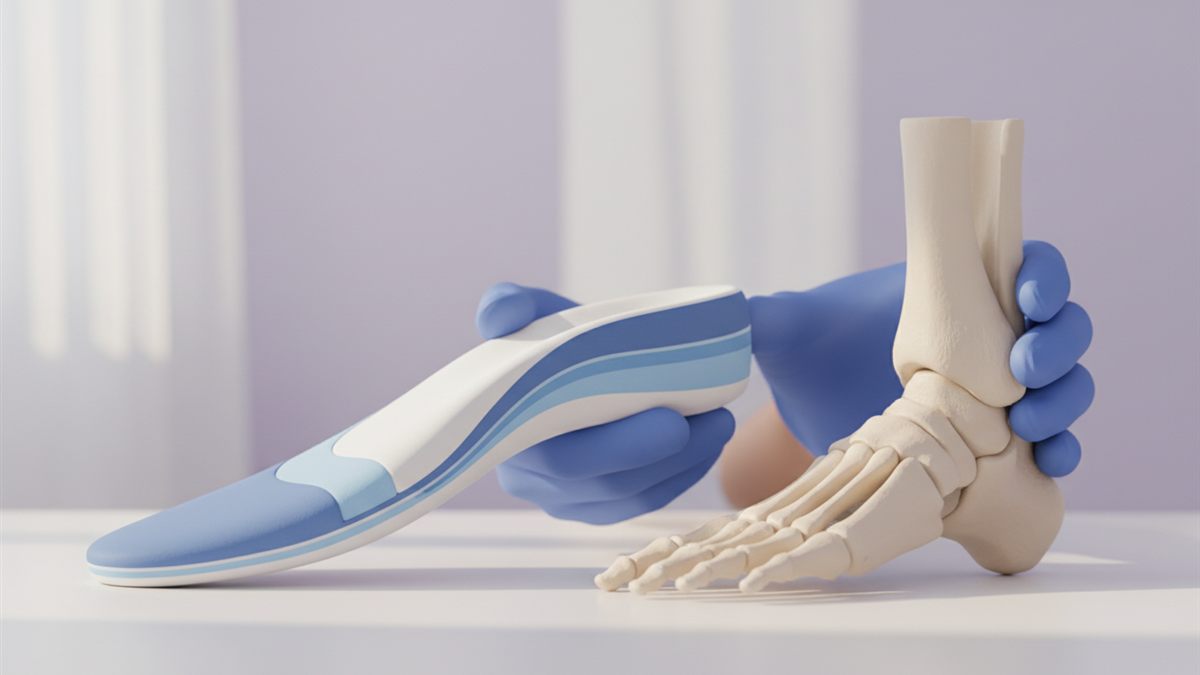
No. Orthotics, whether off-the-shelf insoles or a custom-moulded device, don't permanently reshape an adult arch or cure flat feet. What they do is support, align and offload the foot, easing pain and reducing strain on the tendons and joints while you're wearing them. The NHS puts it plainly: insoles "will not change the shape of your feet but can help with things like pain or stiffness" (NHS).
Cleveland Clinic frames orthotics the same way: they "don't treat your foot or ankle condition but rather, manage your symptoms." Most people who find an orthotic helpful are advised to keep wearing it long-term, since the benefit is generally tied to continued use rather than a one-off correction (Cleveland Clinic). That's an honest, if less exciting, answer than 'fix', but it's the one the evidence supports.
What's Actually Happening in a Flat Foot
Flat feet fall into two broad groups. Congenital flat feet are present from birth or linked to conditions such as cerebral palsy or joint hypermobility disorders. Acquired flat feet, often called fallen arches, develop later in life, most commonly from posterior tibial tendon dysfunction, where the tendon supporting the arch weakens over time, but also from arthritis, diabetes-related nerve changes, or injury (Cleveland Clinic).
Children are a special case: almost all toddlers have flat feet, and arches typically develop naturally between about three and ten years of age. Insoles won't change the shape of a growing foot any more than they will an adult one (the NHS is clear that they don't alter foot shape, only ease pain or stiffness), so they're generally unnecessary for children whose flat feet aren't causing any symptoms (NHS).
What Orthotics Do and Don't Do
According to OrthoInfo, orthotic devices work by aligning and supporting the foot, correcting or accommodating deformities, and improving overall foot function. For example, a wedge built into the inner side of a shoe can support a flat foot and help reduce strain on the posterior tibial tendon (OrthoInfo/AAOS). Note the wording: correct *or* accommodate. Orthotics adjust how load moves through the foot; they don't restructure bone and ligament.
For adult acquired flatfoot specifically, research on ankle-foot orthoses shows they can help arrest progression of the deformity and potentially avoid surgery, but this is described as slowing or managing the condition, not reversing it structurally (PubMed). Cleveland Clinic also notes that good-quality research specifically proving orthotics correct flat feet is limited, even though the devices are considered low-risk and commonly helpful for symptoms (Cleveland Clinic).
Why Strengthening Matters Too
Orthotics work best as part of a broader plan rather than a stand-alone fix. Cleveland Clinic's conservative approach to flat feet includes physical therapy to strengthen the muscles of the feet and ankles alongside supportive footwear and orthotics (Cleveland Clinic). Gait Happens makes a similar point: leaning on orthotics alone, without addressing underlying muscle weakness, may not build the foot strength and stability needed for the longer term (Gait Happens).
In practice, this is why an orthotist or podiatrist will often work alongside a physiotherapist or biokineticist. The device manages load and symptoms in the short term, while a graded strengthening programme addresses the muscles and tendons doing the underlying work.
When Flat Feet Actually Need Treatment
Most flat feet, in children and adults, cause no symptoms at all and are considered a normal variation, not a condition requiring treatment (NHS; Cleveland Clinic). Treatment becomes worth pursuing when flat feet come with pain, stiffness, weakness or numbness, frequent injuries, difficulty walking, or a sudden change affecting just one foot.
Surgery is rarely needed for flat feet, and is generally reserved for cases where conservative measures such as orthotics, footwear changes and strengthening haven't helped, and there's a genuine structural or tendon problem behind the symptoms (NHS).
Getting Assessed in South Africa
If your flat feet are causing problems, the usual route in South Africa is a referral from your GP to an HPCSA-registered podiatrist or orthotist/prosthetist for a proper biomechanical and gait assessment. You can also self-refer in most cases. The Podiatry Association of South Africa maintains a province-by-province directory if you're looking for a registered practitioner near you (PASA).
On funding: orthotic devices and podiatry consultations aren't automatically covered as Prescribed Minimum Benefits. PMB cover is diagnosis-based and applies to a defined list of conditions and chronic diseases, so whether your scheme contributes towards insoles or an orthotist's assessment depends on your specific option and diagnosis (Council for Medical Schemes). It's worth checking directly with your medical scheme and asking your provider for a written quotation before committing to a device, so you know exactly what you'll pay out of pocket.
We offer both custom orthotics and off-the-shelf orthotics depending on what your assessment shows, and can conduct home or hospital visits where getting to a practice is difficult.
When to See an Orthotist or Prosthetist
If your flat feet are painful, changing shape, or affecting how you walk, it's worth having them properly assessed rather than guessing with an over-the-counter insole. An HPCSA-registered orthotist can examine your gait, discuss whether a custom or off-the-shelf device suits your case, and coordinate with a podiatrist or biokineticist where a strengthening programme is needed. You can browse related foot and lower-limb conditions on our conditions page, or book an assessment to talk through your options.
This article is general information and isn't a substitute for individualised clinical advice. Please consult a qualified practitioner about your specific feet and circumstances.
Key takeaways
- Orthotics support, align and offload the foot; they manage symptoms rather than permanently reshaping an adult arch or curing flat feet.
- Most flat feet, in both children and adults, are painless and normal, needing no treatment at all.
- Strengthening exercises through physiotherapy or biokinetics work alongside orthotics, not instead of them, for longer-term foot function.
- Surgery for flat feet is rarely needed and is generally only considered when conservative care fails and there's genuine structural or tendon damage.
- In South Africa, orthotic devices and podiatry consultations aren't automatically covered as Prescribed Minimum Benefits, so check with your medical scheme and request a written quotation upfront.
Have a question about your own situation?
Every device we provide starts with an individual assessment: at home, in hospital, or at the practice.
References
- Flat Feet (Pes Planus): Types, Symptoms & Treatment (Cleveland Clinic)
- Orthotics: Definition, Risks, Benefits, Types & Tips (Cleveland Clinic)
- Orthotics for Flat Feet: Short-Term Relief or Long-Term Solution? (Gait Happens)
- Orthotics (OrthoInfo (American Academy of Orthopaedic Surgeons))
- Flat feet (NHS)
- Biomechanics and Orthotic Treatment of the Adult Acquired Flatfoot (PubMed)
- Find a Podiatrist (Podiatry Association of South Africa)
- Prescribed Minimum Benefits (Council for Medical Schemes (South Africa))