
The short answer
Custom orthotics in South Africa aren't sold off a fixed national price list, so there is no single ZAR figure that applies to every patient. Where pricing has actually been published, it varies widely: one Gauteng-based provider listed on the international clinic directory WhatClinic quotes custom orthotics from around R1,300 to R1,500 per pair WhatClinic, but that reflects a single practice's entry-level insole, not the cost of a fully bespoke functional device, a paediatric brace, or a spinal orthosis, all of which involve considerably more clinical time and material. Because the honest range depends so heavily on your foot, your diagnosis and the device design your orthotist prescribes, the most reliable way to know your actual cost is to book an assessment and request a written, itemised quotation before any work begins.
That said, it helps to understand what makes up the bill, and how South African medical schemes typically treat orthotic insoles when you submit a claim, both of which are covered below.
What actually drives the price
A custom orthotic is not a single product but a small clinical process, and each step adds cost. It starts with a biomechanical and gait assessment carried out by a HPCSA-registered orthotist, whose scope covers assessment, prescription, design and fitting of the device SAOPA. This isn't a formality. It determines exactly what your foot needs, which in turn determines everything that follows.
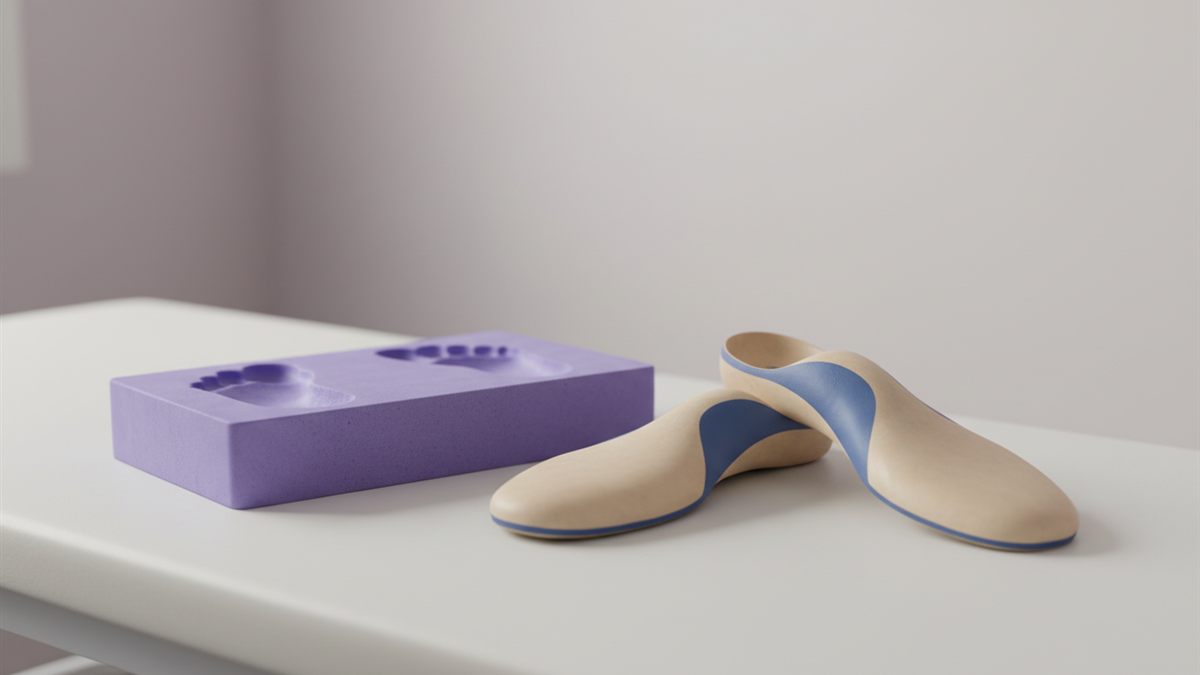
Next comes capturing the shape of your foot, either with a traditional plaster or foam-box mould or with computerised 3D scanning; both methods are still used in practice today, with digital scanning generally offering more precision OrthoInfo/AAOS Cleveland Clinic. Casting or scanning time, and the skill required to interpret it correctly, is built into the price.
Materials matter too. Functional orthotics designed to control movement and offload pressure are typically made from semi-rigid materials such as graphite, carbon fibre or moulded plastic, while accommodative orthotics, often used for diabetic foot protection, use softer, cushioning materials that mould to the foot's shape Cleveland Clinic. Rigid, high-performance materials generally cost more to source and fabricate than soft accommodative foam.
Finally, device complexity changes the price substantially: a simple shoe insert costs far less than a paediatric brace, an ankle-foot orthosis, or a spinal device, each of which needs additional design time, fitting appointments and follow-up adjustments. If you'd like a lower-cost starting point before committing to a fully custom device, it's worth asking your orthotist whether an off-the-shelf orthotic might suit your needs first. Custom fabrication is generally reserved for cases where a prefabricated option won't adequately support your specific foot shape or condition.
Does medical aid pay for orthotic insoles?
Often, yes, but rarely as an automatic, guaranteed benefit, and the funding route depends on your scheme and plan. Most South African medical schemes fund orthotics under an "external medical items", "appliances" or assistive-devices benefit rather than as a standalone line item. Discovery Health, for example, defines external medical items as devices used to assist or substitute a non-functional or missing body part, a category that can extend to orthopaedic and orthotic devices, though you should confirm with Discovery that your specific device is on the approved list before treatment. This benefit is paid from a combined Medical Savings Account and Above Threshold Benefit limit, with annual family limits of R64,200 on Executive and Comprehensive plans, R43,000 on Priority Classic, and R28,900 on Priority Essential; Saver, Smart Saver, Smart, Core and KeyCare plans are not covered under this benefit Discovery Health. Executive and Comprehensive members who exhaust this limit can apply for an additional Extender Benefit, subject to clinical review.
Other schemes structure things differently, but the pattern is similar: orthotic and appliance benefits typically sit inside a shared annual family limit (often bundled with prosthetics or other external medical devices), and getting approval generally requires a detailed clinical motivation, supporting diagnostic evidence, a formal itemised quotation, and referral from a treating specialist rather than a general practitioner, according to one medical aid comparison resource medicalaid.com.
Prescribed Minimum Benefits (PMBs) are a separate consideration. PMBs guarantee cover for around 271 defined diagnosis-treatment pairs and 26 chronic conditions, regardless of which plan you're on Council for Medical Schemes. Orthotic insoles are not listed as a stand-alone PMB category, so they are usually funded through your day-to-day or external medical items benefit rather than guaranteed under PMB rules, unless your orthotic is required as part of managing a condition that itself qualifies as a PMB (for example, certain diabetic or post-surgical presentations), in which case your scheme will need to assess this individually.
If your need for orthotics follows a motor vehicle accident, the Road Accident Fund can cover medical expenses that are reasonable, necessary and directly related to injuries sustained in the accident, claimed as part of past or future medical expenses Road Accident Fund. Because pre-authorisation and documentation requirements differ across schemes and claim types, ask your orthotist for a written quotation with the relevant tariff codes so you or your representative can submit it to your scheme or the RAF before treatment begins.
When to see an orthotist
It's worth booking an assessment if you're dealing with persistent foot, ankle or lower-limb pain, a diagnosed condition affecting your gait, diabetic foot risk, a paediatric development concern, or you're recovering from injury or surgery and need additional support, offloading or stabilisation. A proper assessment is also the only way to get an accurate, itemised quotation rather than relying on a general price range. Our custom orthotics service includes home and hospital visits across Centurion and the wider Gauteng area for patients who find it difficult to travel to our Morningside rooms. You can browse common presentations we support under conditions, or simply book an assessment and we'll talk you through the process and the likely cost drivers for your specific case.
This article is general information for South African readers and is not a substitute for individual clinical advice. Always have your specific foot or lower-limb condition assessed by a registered orthotist or your treating doctor before deciding on any device.
Key takeaways
- There is no fixed national ZAR price list for custom orthotics in South Africa; one aggregator-listed provider quotes from roughly R1,300–R1,500 for a basic pair, but complex or paediatric devices cost more. Always request a written quotation after assessment.
- Price is driven by the clinical assessment, the casting or 3D-scanning method used, the materials (rigid functional vs soft accommodative), and the complexity of the device prescribed.
- Medical schemes generally fund orthotics through an external medical items, appliances or assistive-devices benefit paid from savings/above-threshold limits, not as an automatic guaranteed benefit. Limits vary widely by scheme and plan, and you should confirm your specific device qualifies before treatment.
- Orthotic insoles are not a stand-alone Prescribed Minimum Benefit, so cover typically depends on your specific plan unless the device is needed to manage a PMB-qualifying condition.
- Approval usually needs a specialist's clinical motivation and a formal itemised quotation, and Road Accident Fund claims may apply where the need follows a qualifying motor vehicle accident.
Have a question about your own situation?
Every device we provide starts with an individual assessment: at home, in hospital, or at the practice.
References
- Orthotics in South Africa – Check Prices & Reviews (WhatClinic)
- Get External Medical Items on Your Medical Aid (Discovery Health)
- Prescribed Minimum Benefits (Council for Medical Schemes)
- SAOPA – South African Orthotic & Prosthetic Association (SAOPA)
- Orthotics (OrthoInfo (American Academy of Orthopaedic Surgeons))
- What Are Orthotics? (Cleveland Clinic)
- Best Medical Aid Schemes That Cover Prosthetics (2026) (medicalaid.com)
- Medical Expenses (Road Accident Fund)